
“What if a city could read time by watching the shadow of the sun?”
Long before smartphones told us the time, before satellites mapped the sky and before modern clocks became part of everyday life, the people of Jaipur were looking upwards.
At Jantar Mantar, the sky was not simply something to look at.
It was something to measure.
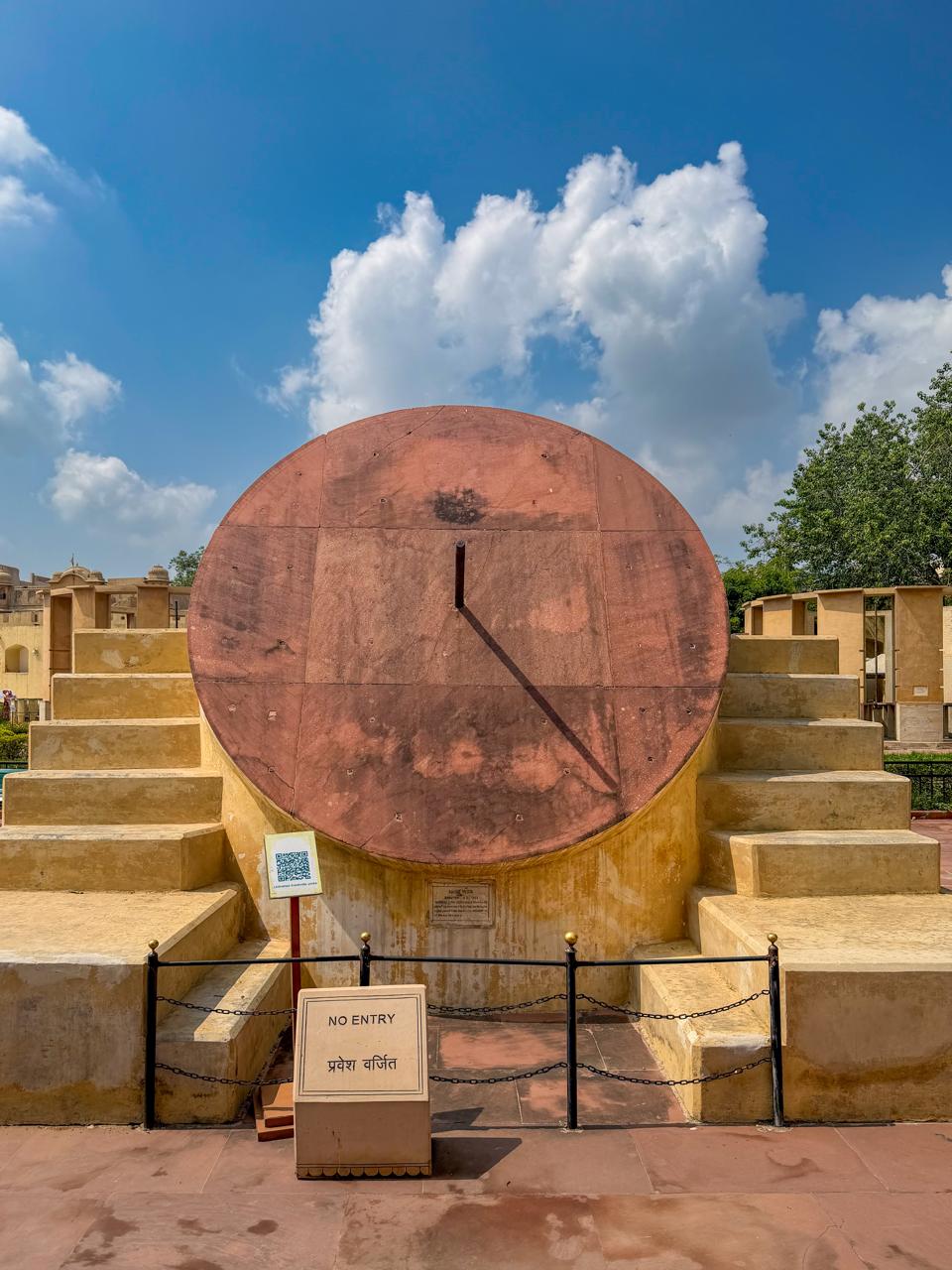
A Different Kind Of Monument
At first glance, Jantar Mantar looks like an unusual collection of giant stone structures.
Huge triangles.
Curved walls.
Steps.
Arcs.
Geometric forms rising from the ground.
But these were never built simply to look beautiful.
They were instruments.
Built to understand the movement of the sun, stars and planets.
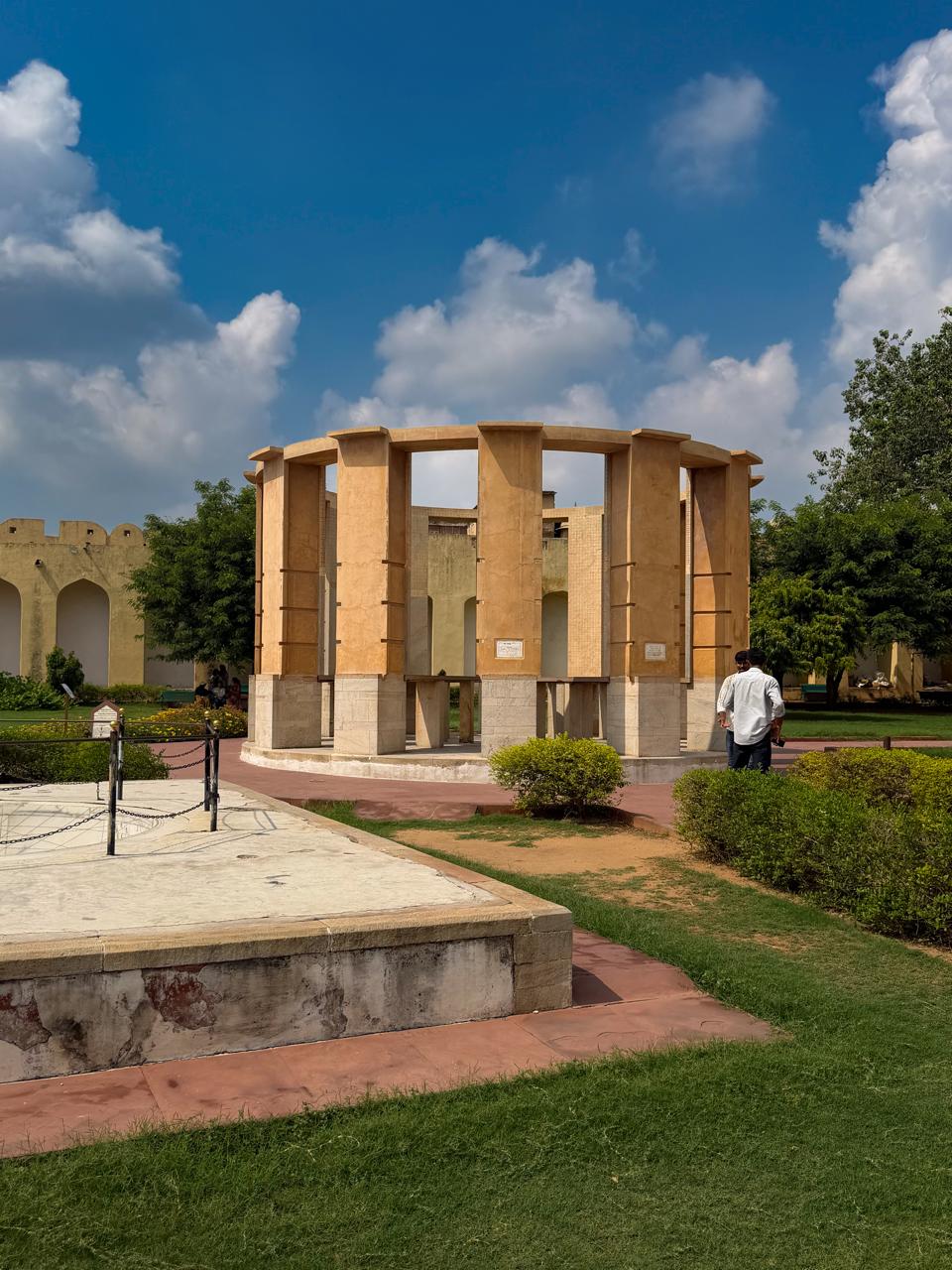
The Man Who Wanted To Measure The Sky
The story begins with Maharaja Sawai Jai Singh II, the founder of Jaipur.
He was a ruler, but also deeply interested in astronomy and mathematics.
In the early 18th century, he commissioned observatories to improve astronomical observations and calculations.
Jaipur's Jantar Mantar became the largest and most celebrated of them.
Here, architecture became science.
And stone became an instrument.
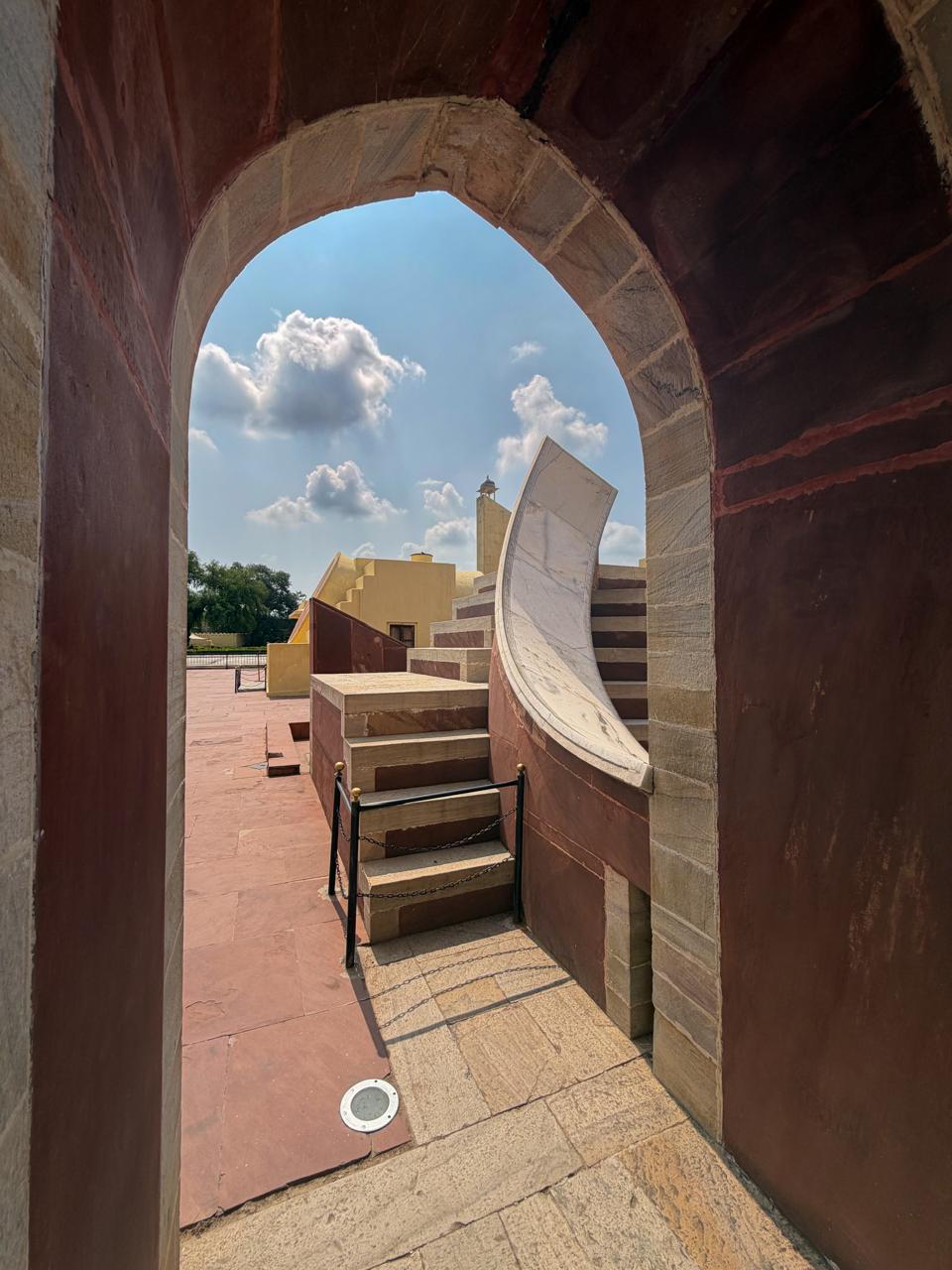
When The Shadow Became A Clock
Stand beside the Samrat Yantra and watch its shadow.
It moves slowly.
Almost imperceptibly.
But it is telling time.
The enormous triangular structure is essentially a giant sundial, designed to measure local solar time with remarkable precision.
The sun moves.
The shadow moves.
And time reveals itself.
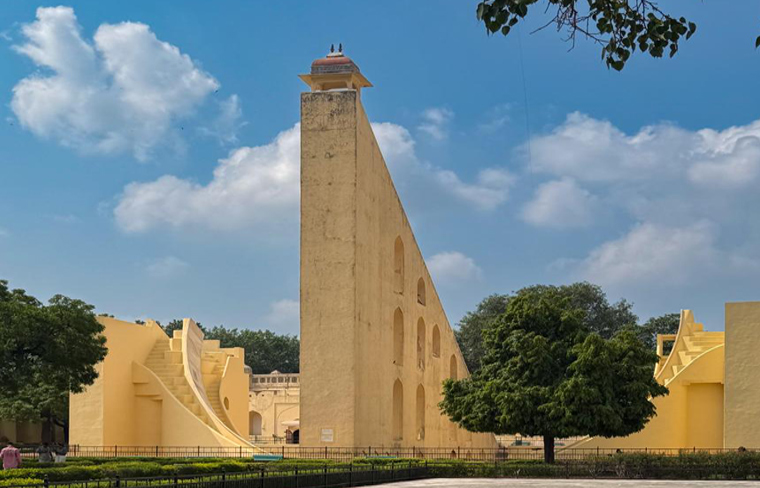
The Sky Written In Stone
Look at the surfaces carefully.
The curves are not random.
The markings are not decoration.
Every angle has a purpose.
Every scale is part of a calculation.
The observatory was designed so that the movement of celestial bodies could be observed and translated into measurable information.
The sky above Jaipur had become a mathematical landscape.
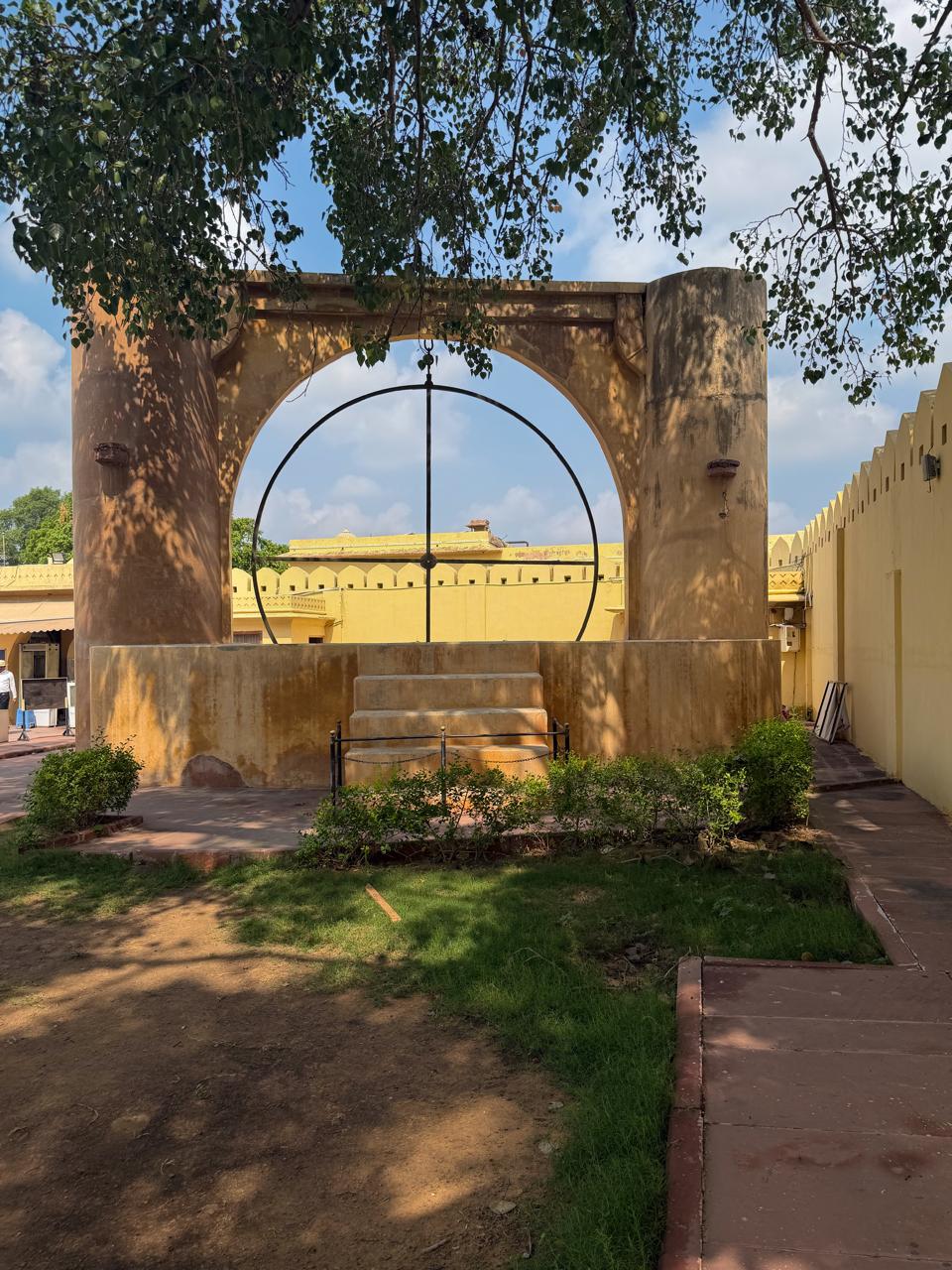
Measuring What We Cannot Touch
The astronomers could not reach the stars.
So they built instruments to understand them.
They observed the position of celestial bodies.
Measured angles.
Tracked movements.
Calculated time.
And used those observations to understand the heavens.
The instruments turned something distant and unreachable into something that could be measured.
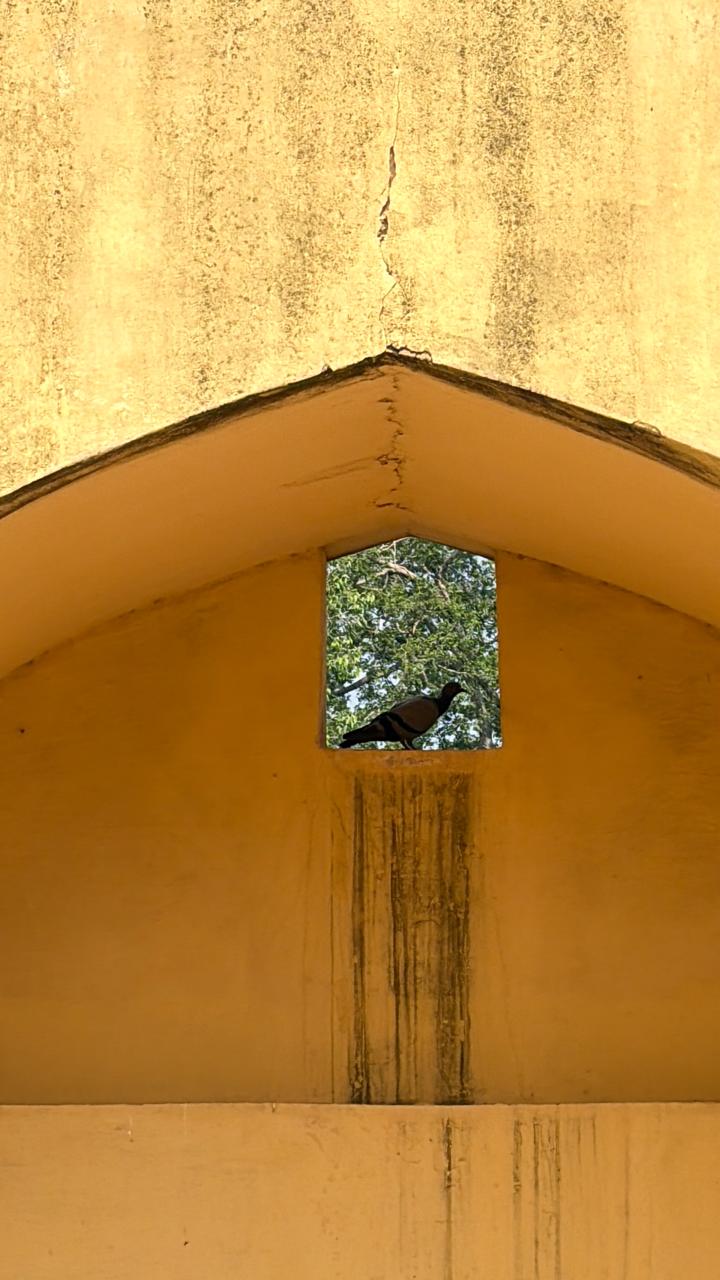
A City Built Around Time
There is something fitting about finding Jantar Mantar in Jaipur.
The city itself was carefully planned.
Its streets were laid out according to geometry.
Its architecture followed proportion.
And here, at the observatory, even the movement of the heavens was being studied through mathematics.
Jaipur was not simply being built.
It was being calculated.
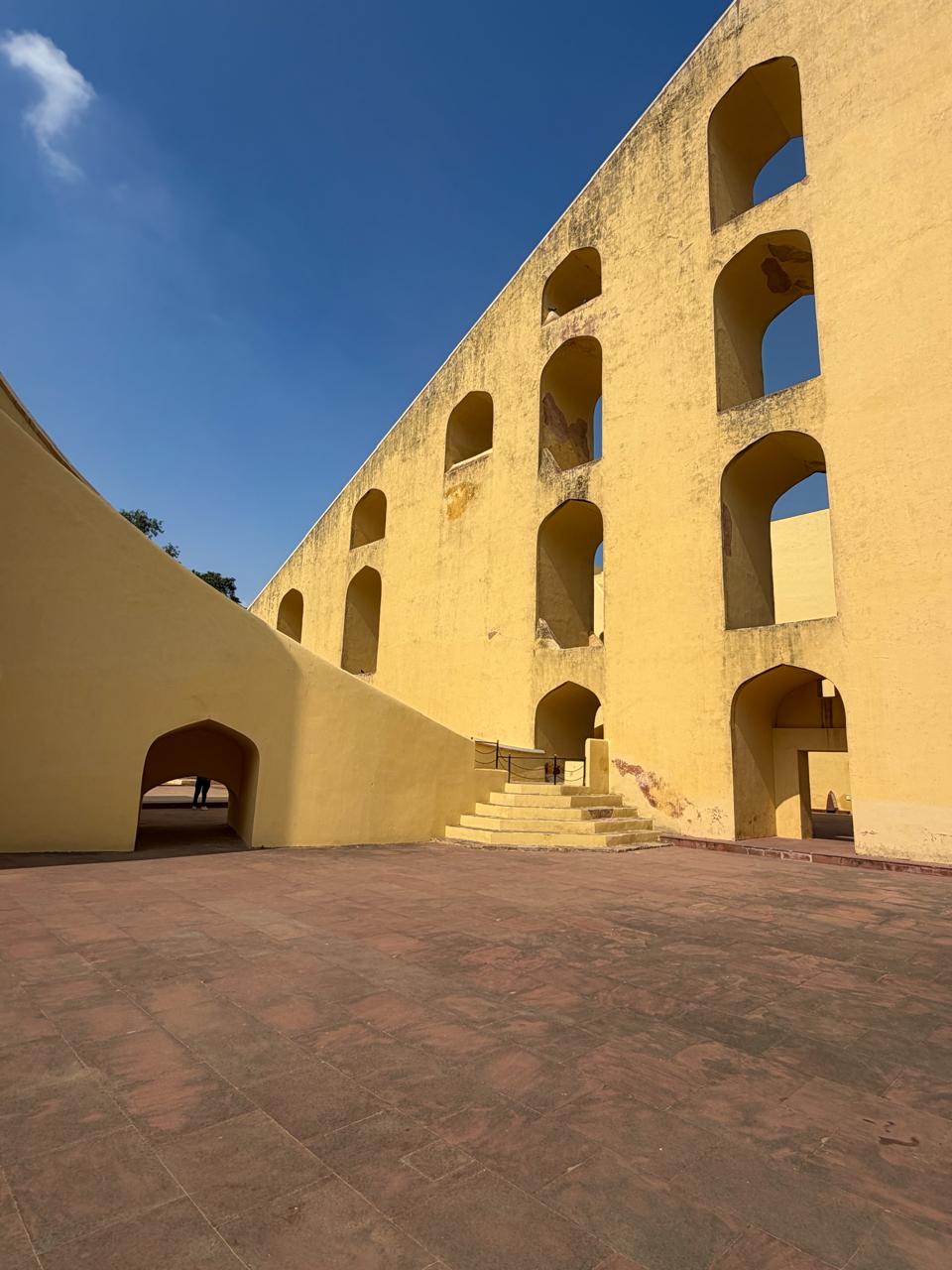
More Than Astronomy
Jantar Mantar was connected to the practical needs of its time.
Astronomical observations helped determine calendars.
They helped establish time.
They supported calculations related to celestial events.
And they played an important role in the astronomical traditions of the royal court.
The observatory connected the sky above Jaipur to life on the ground.
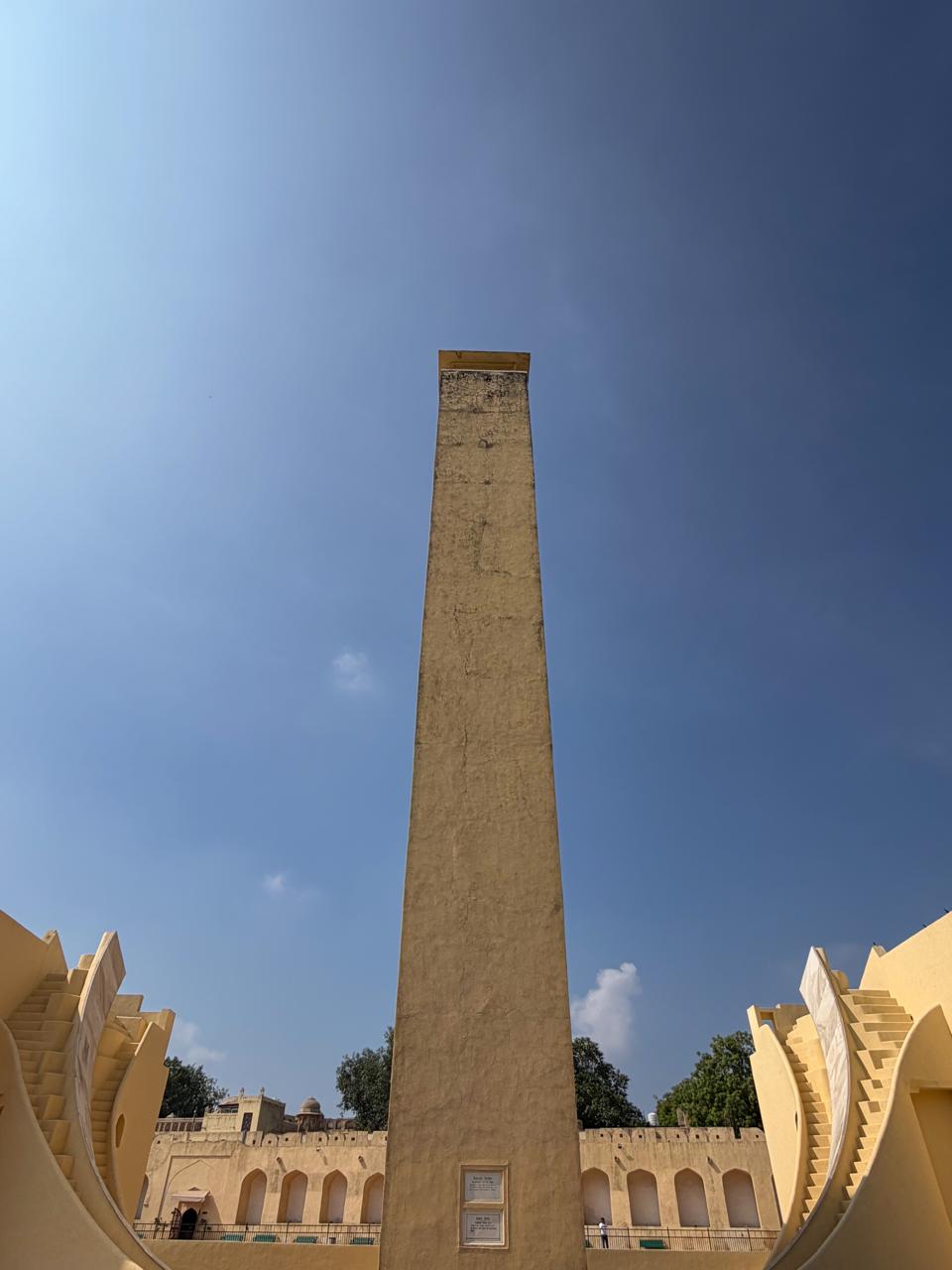
When Science Looked Like Architecture
Today, we might use computers to make these calculations.
Satellites can track celestial bodies.
Atomic clocks can measure time with extraordinary accuracy.
But here, centuries ago, the same questions were being asked.
Where is the sun?
What time is it?
Where is this star?
How is the sky moving?
The difference was the technology.
The curiosity was the same.
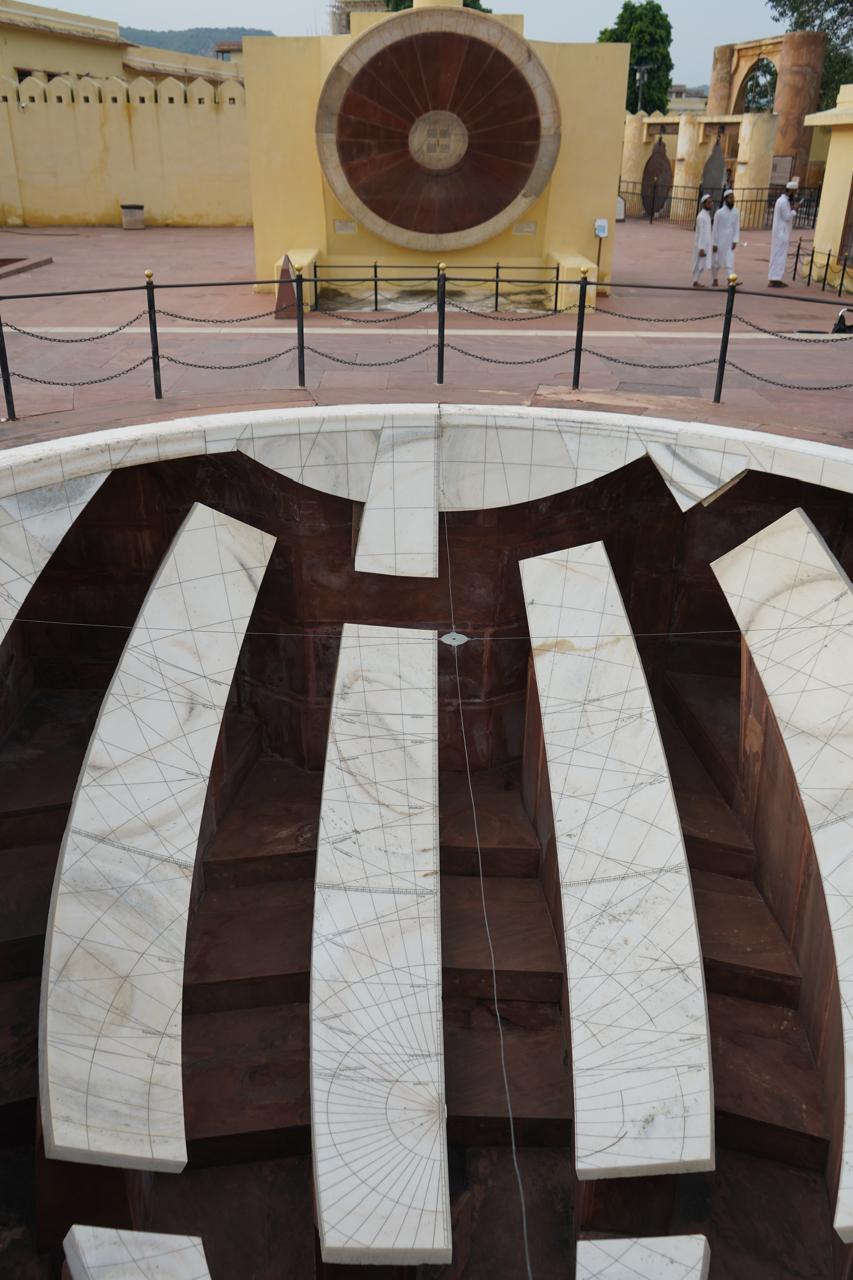
The Shadow Is Still Moving
Perhaps the most beautiful thing about Jantar Mantar is that its instruments still communicate in the same language they were designed for.
The sun rises.
The shadow moves.
The Earth turns.
And the instrument continues to measure.
Centuries later, the sky has not changed its rhythm.
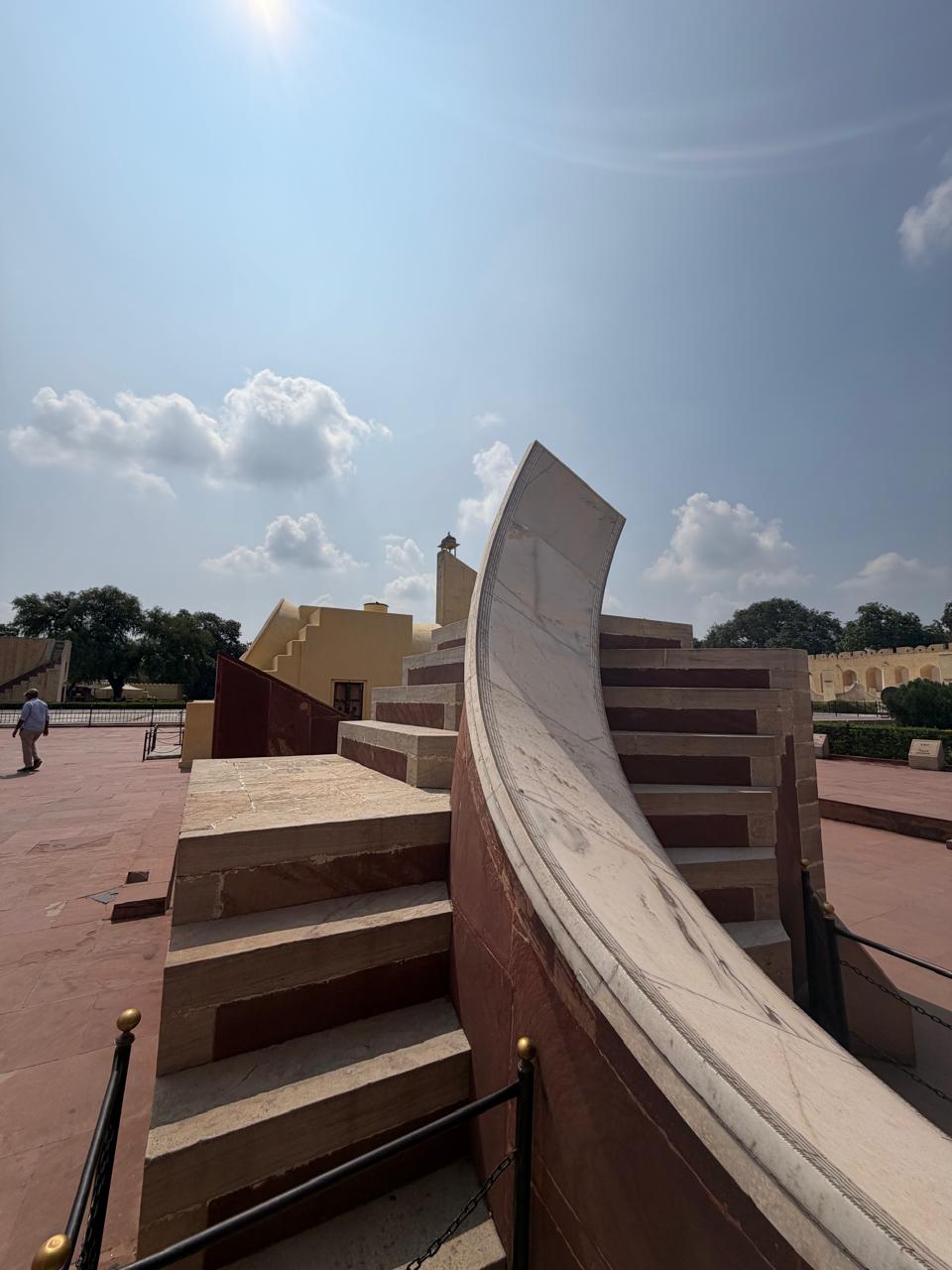
A Monument That Still Works
We usually think of heritage as something that belongs to the past.
Jantar Mantar challenges that idea.
Because these instruments were built centuries ago, but their relationship with the sky is still happening now.
The sun is still moving across them.
The shadows are still shifting.
The mathematics is still there.
This is not simply a monument to science.
It is science preserved in stone.
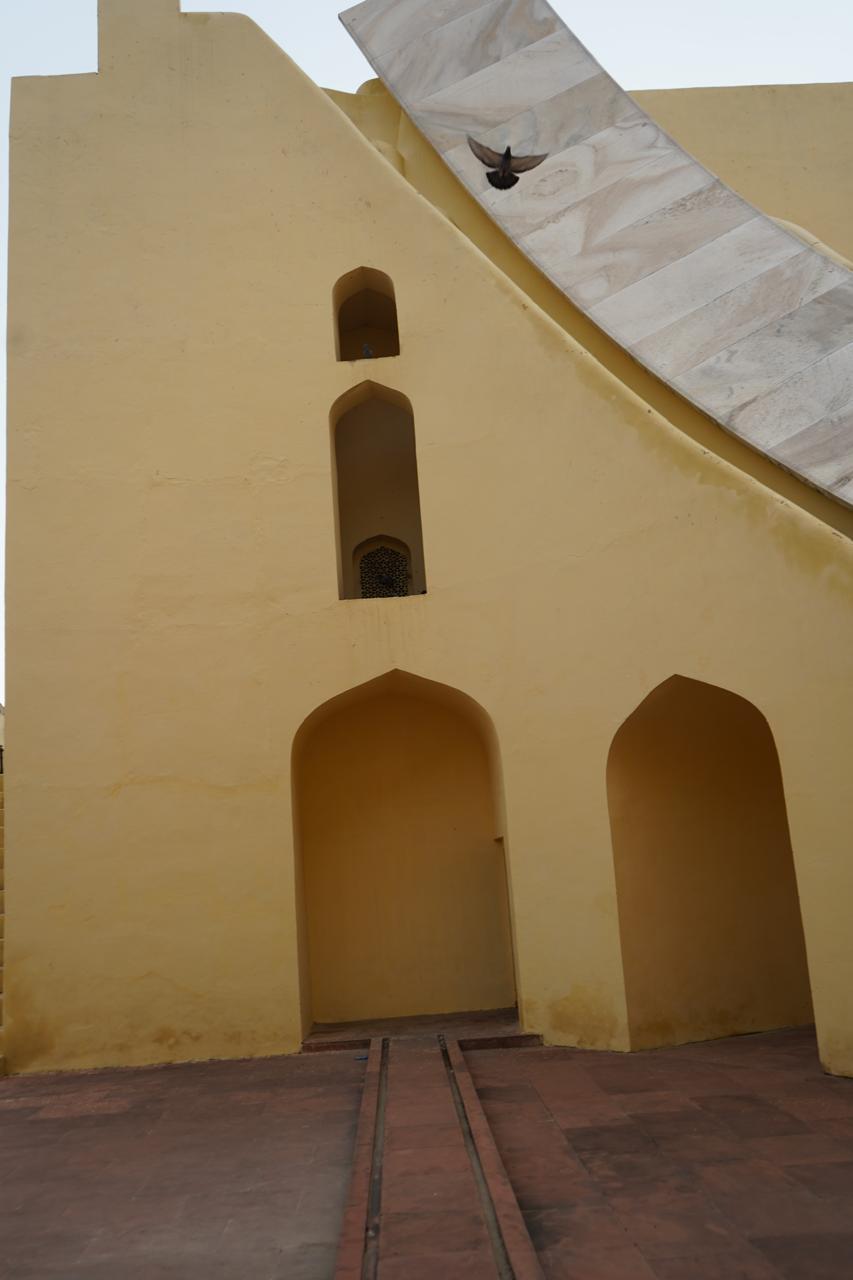
Looking Up
Standing inside Jantar Mantar, you begin to look at the sky differently.
Not simply as something beautiful.
But as something measurable.
Something with patterns.
Movements.
Cycles.
Time.
Perhaps that was the greatest idea behind this place:
If we observe carefully enough, even the sky can tell us a story.
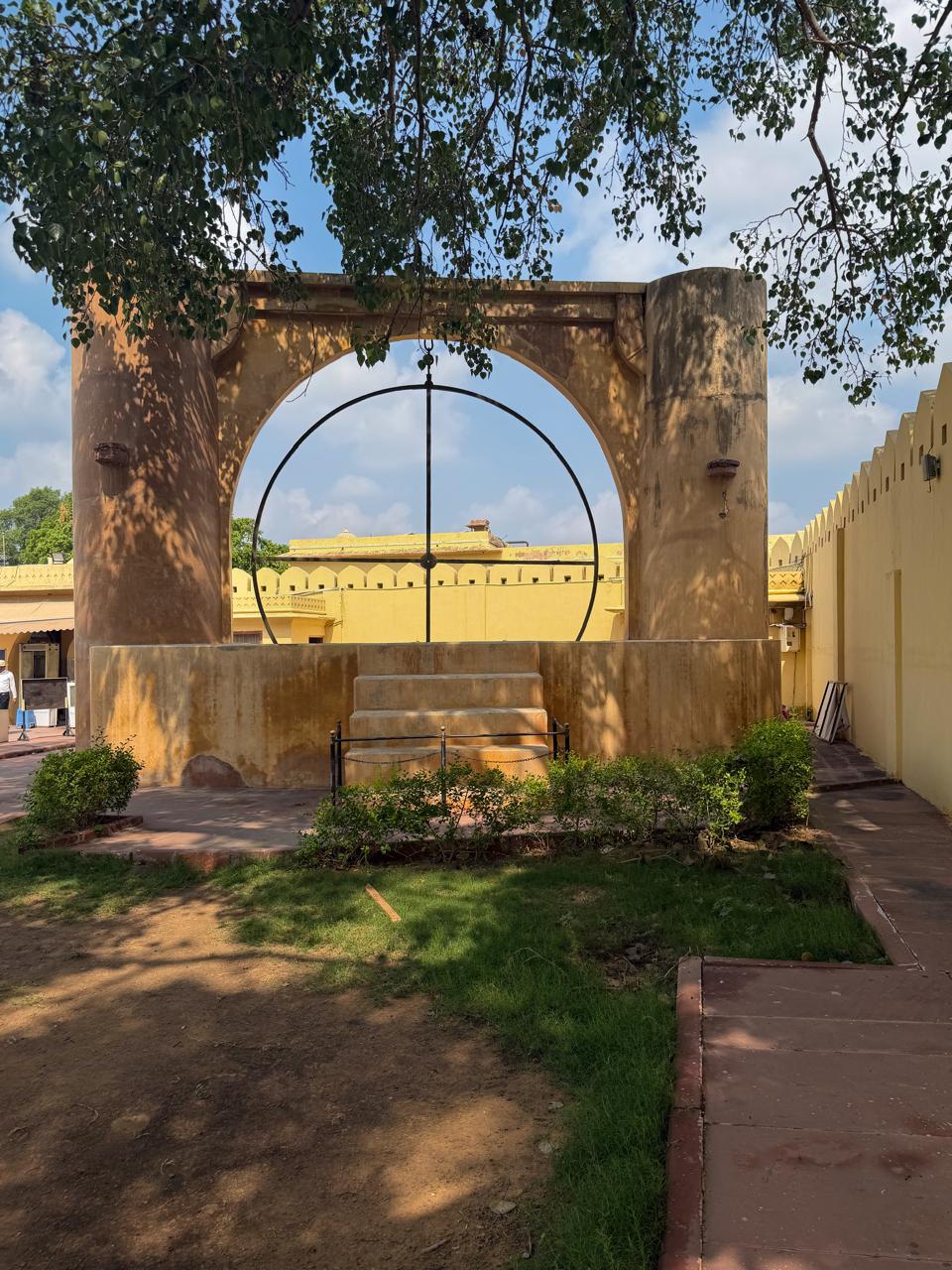
Jaipur And The Sky
We came to Jantar Mantar looking at giant structures made of stone.
We left looking at the sky.
Because these instruments remind us that curiosity does not belong to one age.
Centuries ago, Jaipur looked upwards and asked questions.
And then it built something extraordinary to find the answers.
**Stone became a clock.
Geometry became a language.
And the sky became something Jaipur could measure.**
Stories of Indian Cities
Because some monuments don't just preserve history.
They preserve the questions that people once asked about the world.
Jantar Mantar, Jaipur, Rajasthan
Built: 18th century
Significance: Astronomical observatory and UNESCO World Heritage Site
Photographs & Story: Stories of Indian Cities / Cartist

